In the competitive world of commercial construction, project managers and MEP (Mechanical, Electrical, and Plumbing) contractors face a constant dual challenge: maximizing energy efficiency while minimizing labor costs and project timelines. For decades, traditional galvanized sheet metal ducting wrapped in fiberglass insulation was the default industry standard. However, the rise of advanced material science has introduced a faster, lighter, and more efficient contender.
Enter PIR (Polyisocyanurate) Pre-Insulated Duct Panels.
As a leading manufacturer of composite ductwork materials, we have seen firsthand how PIR panels are transforming commercial ventilation systems worldwide. Here is a comprehensive look at why PIR insulation boards are becoming the go-to specification for modern HVAC designs.
What Exactly is a PIR Duct Panel?
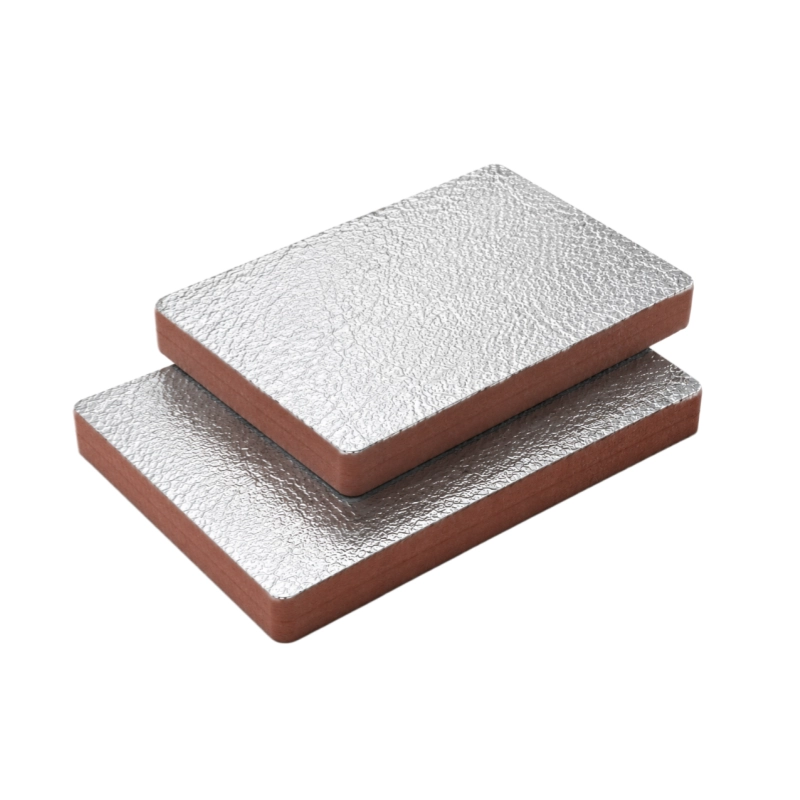
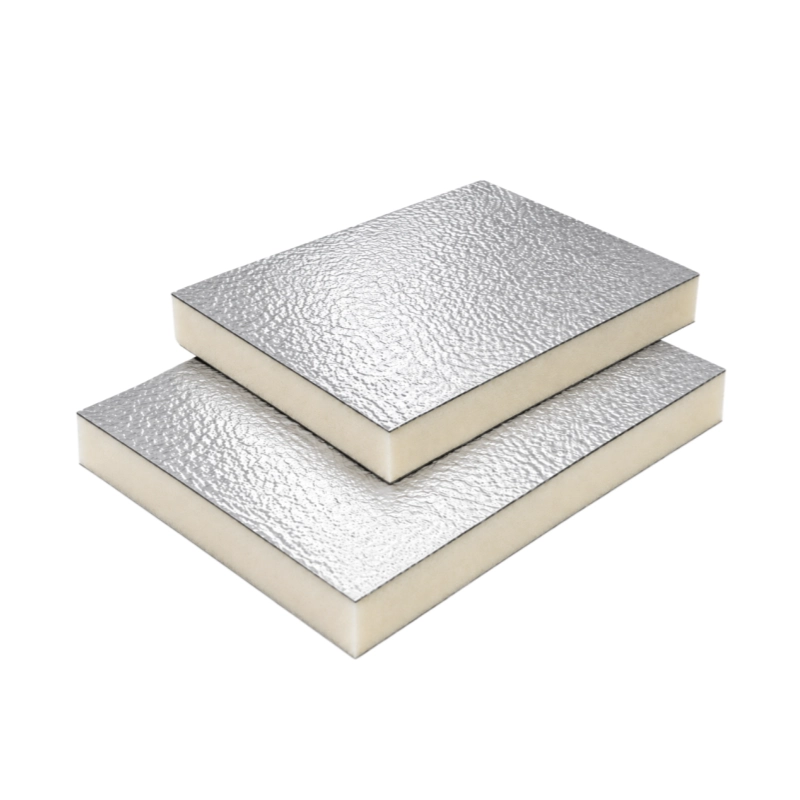
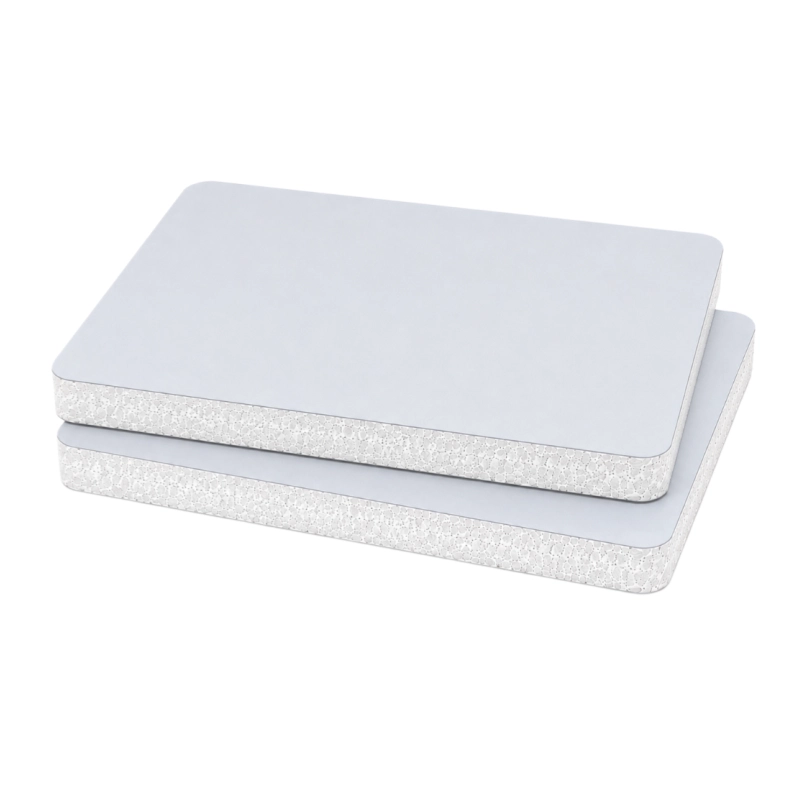
A PIR duct panel is an advanced pre-insulated sandwich panel. It features a rigid, closed-cell polyisocyanurate foam core bonded on both sides with protective aluminum foil (often embossed or reinforced for extra durability).
Unlike traditional ducting, where the metal channels must be built first and then wrapped with insulation by hand, PIR panels combine structure and insulation into a single component. The ductwork is fabricated directly from these rigid boards, completely eliminating the time-consuming secondary insulation phase.
The Core Advantages of PIR Panels in HVAC Engineering
1. Market-Leading Thermal Performance
When it comes to thermal resistance ($R\text{-value}$), PIR foam is one of the most efficient insulation materials commercially available today. It features an exceptionally low thermal conductivity—typically hovering around $0.020\text{ W}/(\text{m}\cdot\text{K})$ to $0.022\text{ W}/(\text{m}\cdot\text{K})$.
This superior thermal barrier keeps energy loss through duct walls at an absolute minimum. When coupled with the airtight sealing techniques used to connect PIR duct sections, the entire system drastically reduces air leakage. For building developers, this means downsized HVAC equipment requirements, lower operational energy bills, and seamless compliance with strict green building certifications like LEED.
2. Radical Weight Reduction and Structural Safety
Traditional sheet metal ducts are heavy, requiring heavy-duty steel hangers, complex anchoring systems, and multiple installation workers. PIR pre-insulated ductwork is up to 70% to 80% lighter than its galvanized iron equivalents.
This extreme weight reduction yields significant benefits:
- Structural Relief: It puts far less structural load on the building’s roof truss or ceiling framework.
- On-Site Safety: Lightweight panels are significantly safer and easier for technicians to lift and modify on-site, minimizing structural risks and worker fatigue during high-elevation installations.
3. Upgraded Fire and Smoke Resistance
Safety is non-negotiable in commercial building codes. While PIR is a polymer chemical structure, it is formulated with advanced fire-retardant additives. When exposed to flame, the polyisocyanurate ring structure creates a robust, protective char layer that resists flame penetration and prevents the fire from spreading across the duct network. PIR panels achieve excellent fire classifications globally (such as Class 1 or Class 0 ratings depending on regional test specifications), providing crucial peace of mind in high-density public venues.
4. Moisture Resistance and Superior Air Quality
Traditional fiberglass duct wraps are highly vulnerable to moisture. If water vapor penetrates the outer wrap, the fiberglass traps dampness, creating a breeding ground for toxic mold, mildew, and structural rust.
PIR foam features a closed-cell structure (typically greater than 90% closed cells), meaning it is naturally hydrophobic and does not absorb water. Paired with non-fiber-shedding aluminum linings, the air traveling through PIR ducts remains completely free of loose fibers and airborne allergens, ensuring pristine Indoor Air Quality (IAQ) for hospitals, laboratories, and corporate offices.
The Financial Impact: Slashing On-Site Installation Costs
From a B2B procurement standpoint, the ultimate metric is total installed cost. While premium PIR raw materials may seem like an investment upfront, they unlock massive savings across the construction lifecycle.
Because PIR ducts can be pre-fabricated in a controlled workshop environment and delivered to the job site in long, lightweight segments, installation requires fewer specialized tools and significantly fewer man-hours.
+-------------------------------------------------------------------+
|               Comparative Framework: Metal vs. PIR                |
+--------------------------+----------------------------------------+
| Metric                   | Sheet Metal + Fiberglass | PIR Panel   |
+--------------------------+--------------------------+-------------+
| Material Weight          | High (Heavy load)        | Ultra-Light |
| Fabrication Method       | Two-stage (Cut then wrap)| Single-stage|
| Labor Requirement        | Multiple specialized crews| Small team  |
| Fiber-Shedding Risk      | Yes (Over time)          | No          |
+--------------------------+--------------------------+-------------+
By transitioning to a single-step installation process, contractors regularly report cutting installation schedules by 50% to 60%, allowing projects to hit deadlines faster and reducing costly labor overruns.
Ideal Project Applications
PIR pre-insulated duct panels excel in a wide array of demanding settings:
- Large Industrial Warehouses: Where extensive duct runs require lightweight materials to prevent structural overload.
- High-End Commercial Offices & Retails: Where ceiling space is tightly constrained and high energy-efficiency ratings are required.
- Cleanrooms and Food Processing Plants: Where fiber-free air and strict moisture controls are mandatory to protect product integrity.
Conclusion: Partner with a Specialized Manufacturer
As global energy costs climb and building regulations tighten, traditional duct insulation methods are rapidly becoming obsolete. PIR pre-insulated duct panels offer a definitive path forward—delivering elite thermal control, simplified installation logistics, and exceptional structural longevity.
As a dedicated factory specializing in high-performance duct boards, we utilize state-of-the-art continuous production lines to manufacture PIR panels that deliver consistent density, flawless aluminum bonding, and strict compliance with international fire safety standards.
Are you ready to optimize the HVAC specifications for your next project? Contact our engineering sales team today to request physical samples, detailed technical data sheets, or a factory-direct wholesale quote.